

How Often Should You Professionally Clean Your Rug?
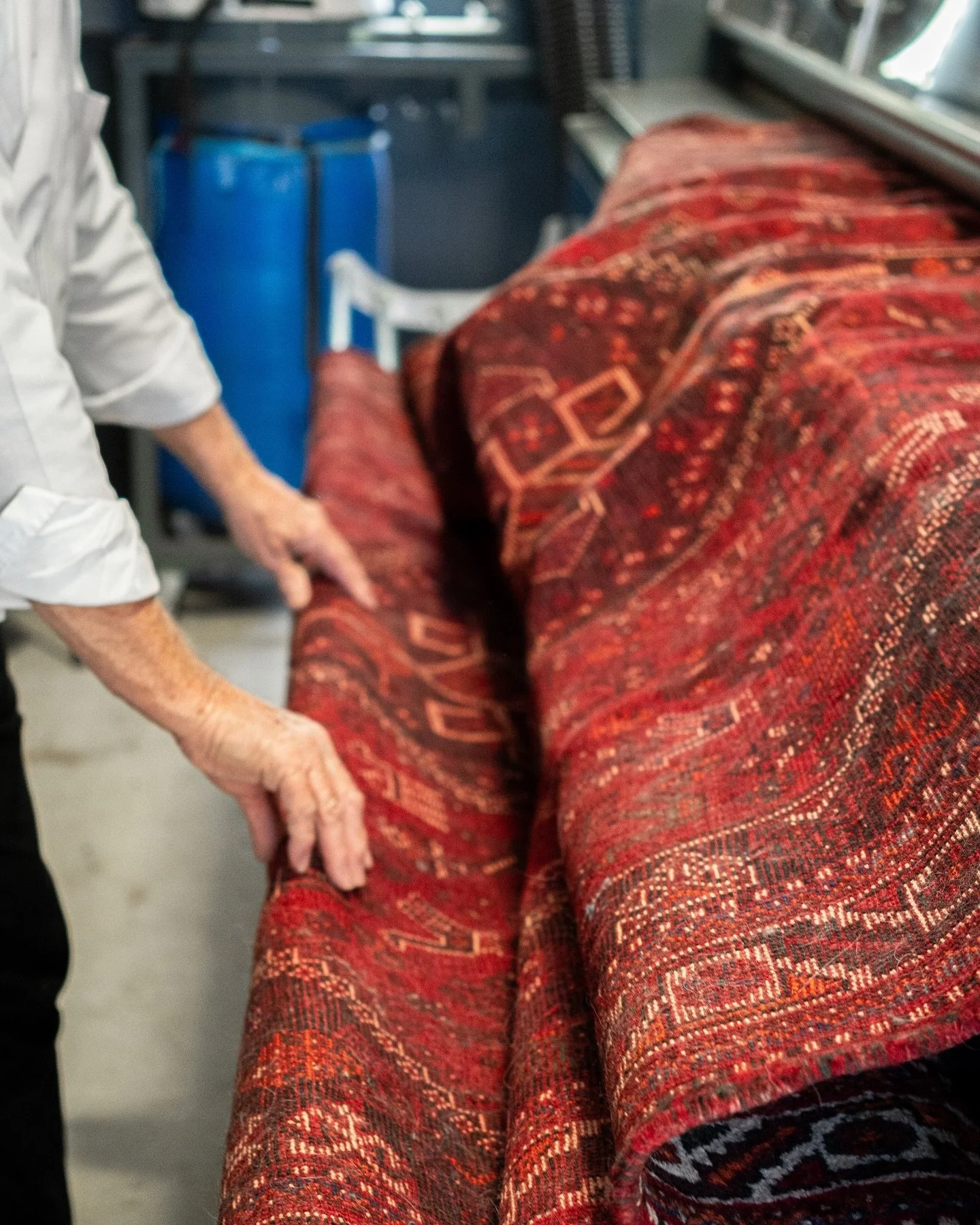
Rug going through Rug Duster
It's one of the most common questions we get asked: how often does a rug actually need a professional clean? The honest answer depends on the rug type, where it's placed and how much traffic it sees — but there are some reliable guidelines that apply to most situations.
Every 12–18 Months for Most Rugs
For a quality wool or natural fibre rug in a normal household setting — a lounge room, bedroom or dining area with moderate foot traffic — a professional clean every 12 to 18 months is a reasonable baseline. This removes the embedded soil and grit that builds up over time and that vacuuming simply can't reach.
The reason this matters isn't just aesthetics. Fine grit particles work their way down into the base of the rug pile and act like sandpaper against the fibres every time someone walks across it. Over time this causes the pile to thin and the rug to look worn and dull — even if it's been vacuumed regularly. Regular professional cleaning removes this abrasive material and significantly extends the life of the rug.
More Frequently If You Have Pets or Children
Households with pets or young children should look at cleaning every 6 to 12 months. Pet dander, hair and odour embed themselves deeply into rug fibres, and standard vacuuming only addresses the surface. Pet urine in particular needs specialist treatment — if it's not fully neutralised it continues to smell, especially in warmer months, and can cause permanent dye damage if left too long.
Persian, Oriental and Antique Rugs
Fine rugs — Persian, Oriental, antique and handmade pieces — should be assessed individually rather than following a standard schedule. These rugs often have natural dyes and aged fibres that are more sensitive to moisture, heat and cleaning products. As a general guide, every 2 to 3 years is appropriate for a fine rug in a low-traffic area, but if it's in a hallway or frequently used room, annual cleaning is worth considering.
The more important point with fine rugs is to use a qualified specialist. The wrong cleaning method on a Persian or handmade rug can cause colour bleed, fibre distortion or shrinkage that permanently reduces the rug's value and appearance.
Silk Rugs
Silk rugs should only be cleaned by a specialist, and only when genuinely needed — typically every 3 to 5 years in low-traffic areas. Silk is extremely sensitive and should never be cleaned with standard carpet cleaning methods or products.
Synthetic Rugs
Modern synthetic rugs are the most forgiving and can generally be cleaned every 12 to 24 months depending on use. They're more tolerant of moisture and standard cleaning methods, though professional cleaning still delivers a noticeably better result than DIY approaches.
Signs Your Rug Needs Cleaning Now
Regardless of the schedule, there are situations where a rug needs cleaning sooner rather than later:
Visible staining or spills that haven't been fully treated
A persistent smell, particularly after wet weather or if pets have been near it
The pile looks flat, dull or matted despite regular vacuuming
It's been more than 2 years since the last professional clean
Onsite or Offsite — What's the Difference?
At Diamond Cleaning Services we offer both onsite rug shampooing and full offsite cleaning. Onsite is convenient and suits many rugs well. Offsite cleaning — which involves pick-up, professional dusting, full immersion washing and controlled drying at our Adelaide Hills facility — delivers a deeper result and is recommended for heavily soiled rugs, fine rugs, and rugs with pet odour issues.
We assess every rug before recommending a method, so you'll always get the right treatment for your specific piece.
Diamond Cleaning Services has been cleaning rugs across Adelaide since 1987. Our technician is a qualified Wool Care Technician since 1998 and a formally qualified ACCI technician. We offer onsite and offsite rug cleaning across Adelaide and all metropolitan areas.
Call 0418 855 000 or book online at diamondcleaningservices.com.au.
All cleaning performed to Australian and New Zealand Standards.